Historic Wood Floors in Back Bay and Beacon Hill: How to Restore, Match and Specify Them

Updated: 3 days ago

Back Bay brownstones and Beacon Hill row houses hold some of the oldest wood floors in the country. Here is how to restore, match and specify them without losing what makes them worth keeping.
Restoring or replacing a historic floor in Back Bay or Beacon Hill? Contact Joe Avila at National Wood Floor Consultants:
Phone: (908) 232-6600
Email: joe@hugginsflooring.com
Book online: Schedule a consultation
Office: 406B West Broad Street, Westfield, NJ 07090. Monday to Friday, 9 to 5. Serving clients nationwide.
Boston's Back Bay and Beacon Hill are full of nineteenth-century brownstones and row houses, many now divided into condominiums or restored as single-family homes. Their floors often include original oak or pine boards, parquet borders and decades of patches. Before any restoration or new floor goes in, an architect or owner needs a clear picture of what is there, what can be saved and what will match.
Why Historic Boston Floors Need A Different Approach

A floor that has been in place for more than a century has usually been sanded, patched, refinished and partly relaid more than once. Boards may be thinner than they look, nails may sit close to the surface, and earlier repairs may use a different species or width. Treating it like a new installation is how restorations go wrong, which is why we start with the same documentation an NWFA certified inspector would make.
Assess The Floor Before You Restore It

Start with measurements, not opinions. Moisture readings in the boards and the subfloor, checks for loose or squeaking areas, and a look at how much wear layer is left above the tongue tell you whether a floor can take another sanding. Readings are compared with normal moisture content for the season, and any cupping is traced to its cause before anyone recommends a fix.
Matching New Boards To Old Ones

Repairs and additions are where historic floors are most often spoiled. Matching an old floor means matching species, cut, width, thickness and the way the wood has aged, not just the stain color. Old-growth oak and pine usually have tighter grain than most boards sold today, so replacement stock has to be chosen carefully. We specify the match, source the material and test finish samples on site before work starts.
Want an expert opinion on what can be saved? Book a virtual consultation with Joe Avila.
Parquet Borders, Inlays And Patterns

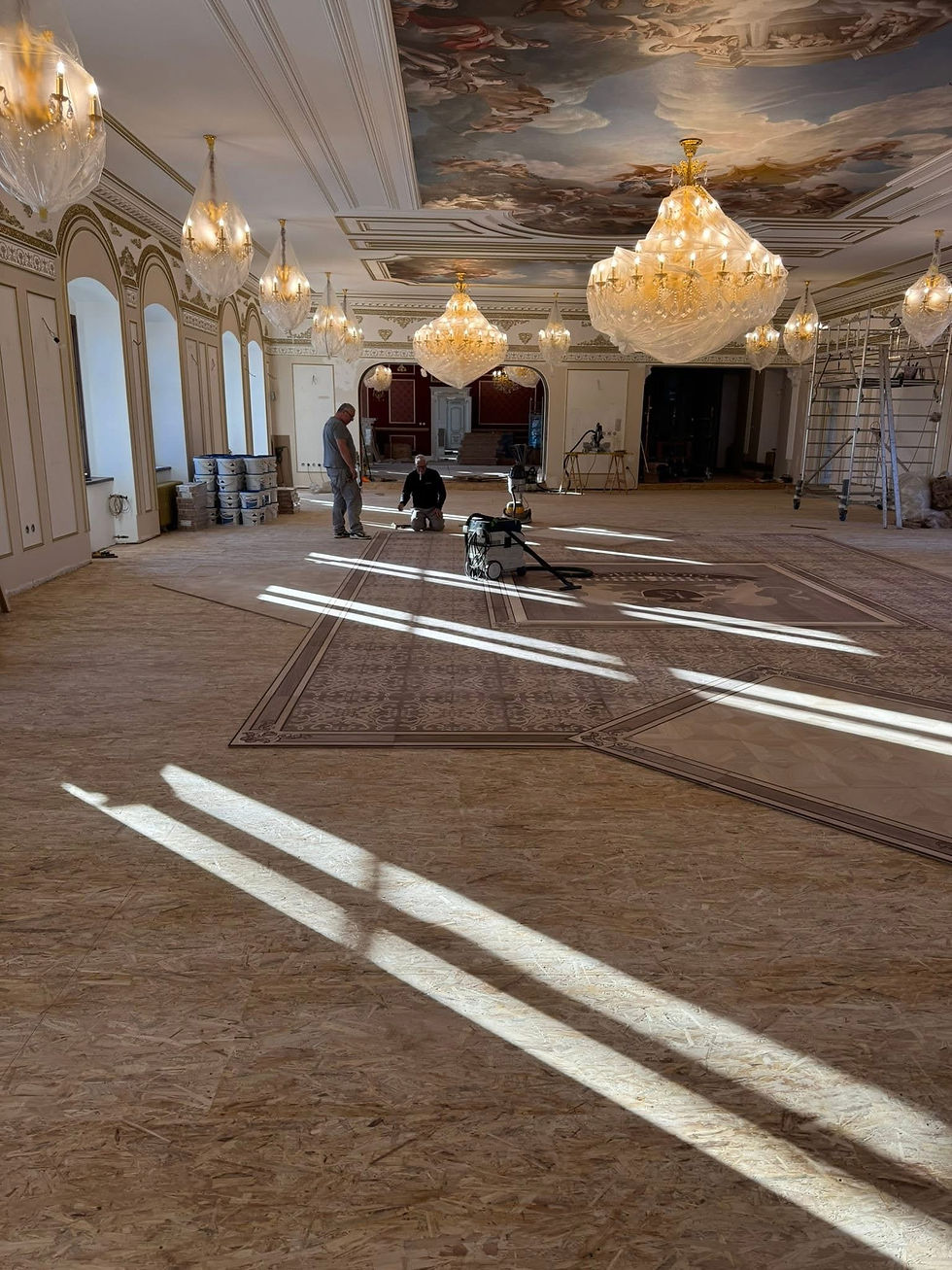
Many older Boston homes have parquet borders around a field of straight boards, or patterned floors in front rooms and dining rooms. Missing pieces can usually be cut to fit, but the pattern, species and grain direction must line up with what survives. For new rooms that should feel original, a Versailles or herringbone pattern can be specified to sit naturally beside the historic floor.
Old Framing And Today's Sound Requirements

When a brownstone is divided into condominiums, the people below can hear footsteps through old joists and thin subfloors, and many associations set sound requirements before a hard floor can go in. Meeting them in an old building usually means planning an underlayment and subfloor system that adds as little height as possible. Joe Avila pioneered subfloor sound attenuation systems for New York City apartments, and the same thinking applies here.
Winter Heat, Dry Air And Seasonal Gaps

Boston winters bring months of indoor heat that dries the air. Old floors respond with gaps between boards that close again in summer, and new boards installed into that cycle can shrink or split if they were not acclimated to the conditions they will live in. Humidity control belongs in the specification, not as an afterthought.
Sourcing Direct From Domestic And European Mills

We specify and source replacement and new flooring direct from domestic and European mills, so species, grade, cut and thickness can be matched to the existing floor instead of chosen from whatever happens to be available. Every delivery is checked against the specification and given time to reach the right moisture level before it is installed.
Restoration And Installation Checks We Make
Moisture readings in the existing floor, the subfloor and any new material before work begins.
Remaining wear layer and board thickness before any sanding.
Species, cut, width and finish samples matched and approved on site.
Subfloor fastening and flatness wherever boards are lifted or replaced.
Underlayment and subfloor build-up checked against the building's sound requirements.
Indoor humidity during and after installation.
These are the same points an inspector checks when a historic floor fails, so getting them right during restoration is the best protection against a dispute later.
Not sure what is behind a problem in your own floor? Book a virtual consultation with Joe Avila.
Quick Answers About Historic Wood Floors In Back Bay And Beacon Hill
Can A 100-Year-Old Hardwood Floor Be Refinished Again?
Often, yes, if enough wear layer remains above the tongue. Board thickness has to be checked first, because floors that have been sanded several times may not survive another full sanding. An inspection shows how much material is left.
How Do You Match New Wood To An Old Floor?
By matching species, cut, width, thickness and aged color, then testing finish samples on site. Old-growth boards often have tighter grain than new stock, so replacement material is selected carefully and given time to acclimate.
Why Do Old Wood Floors Gap In Winter?
Indoor heat dries the air, the boards lose moisture and shrink, and gaps open between them. Small seasonal gaps that close in summer are normal. Large or growing gaps point to a humidity or moisture problem worth checking.
Who Should Check A Historic Floor Before Restoration?
An independent consultant or NWFA certified inspector who is not the installer. They document moisture, thickness and condition before work starts, which protects the owner and the contractor. Here is what hardwood floor inspections include.
Planning Work On A Historic Floor In Back Bay Or Beacon Hill?

National Wood Floor Consultants specifies, sources and oversees restoration and new wood floors for historic homes in Boston and nationwide. Call (908) 232-6600 or book a consultation, and see our specification services and materials and contractor vetting.
Have a question about your own floor? Call (908) 232-6600, email joe@hugginsflooring.com or book a virtual consultation with Joe Avila, NWFA certified wood flooring inspector. Planning a new floor? See our wood flooring specification and sourcing services.
About The Author

Joe Avila is the founder and lead consultant of National Wood Floor Consultants, with 26 years in wood flooring. He is an NWFA Certified Wood Flooring Inspector, installer and sander, and teaches accredited AIA, ASID and IDCEC continuing education for architects and designers. His project experience includes Montclair University, One Wall Street, institutional and landmark buildings, and luxury residences and penthouses, and he pioneered subfloor sound-attenuation systems for New York City apartments. Read Joe's full profile.
Related Reading
On-Site Quality Control for Wood Floor Installations in NJ, NY and PA: What Gets Checked
Reclaimed and Antique Wood Floors on Philadelphia's Main Line: How to Specify and Source Them
Versailles Parquet in Manhattan: How to Specify, Source and Install It Right
Gaps Between Hardwood Floorboards in Winter: Normal or a Problem?
Panel Parquet Floors in Washington DC and McLean: How to Specify and Source Them
Comments