10 Patterned Wood Floor Ideas for Luxury Homes, From Herringbone to Versailles

Updated: 5 days ago

From classic herringbone to hand-fitted Versailles panels, a patterned floor is the most architectural surface in a room. Here are 10 ideas worth specifying for a luxury home, and what it takes to get each one right.
Planning a patterned floor? Call Joe Avila at (908) 232-6600 or book a consultation.
A plank floor fills a room. A patterned floor composes it. Herringbone, chevron and parquet panels set the rhythm of a space before a single piece of furniture arrives, which is why architects and designers keep returning to them for residences, penthouses and estates. They also leave the least room for error: every pattern exaggerates a crooked layout line, a damp subfloor or a board that was never allowed to acclimate. These are the patterns we specify most often for luxury homes, with notes on what makes each one work.
1. Classic Herringbone
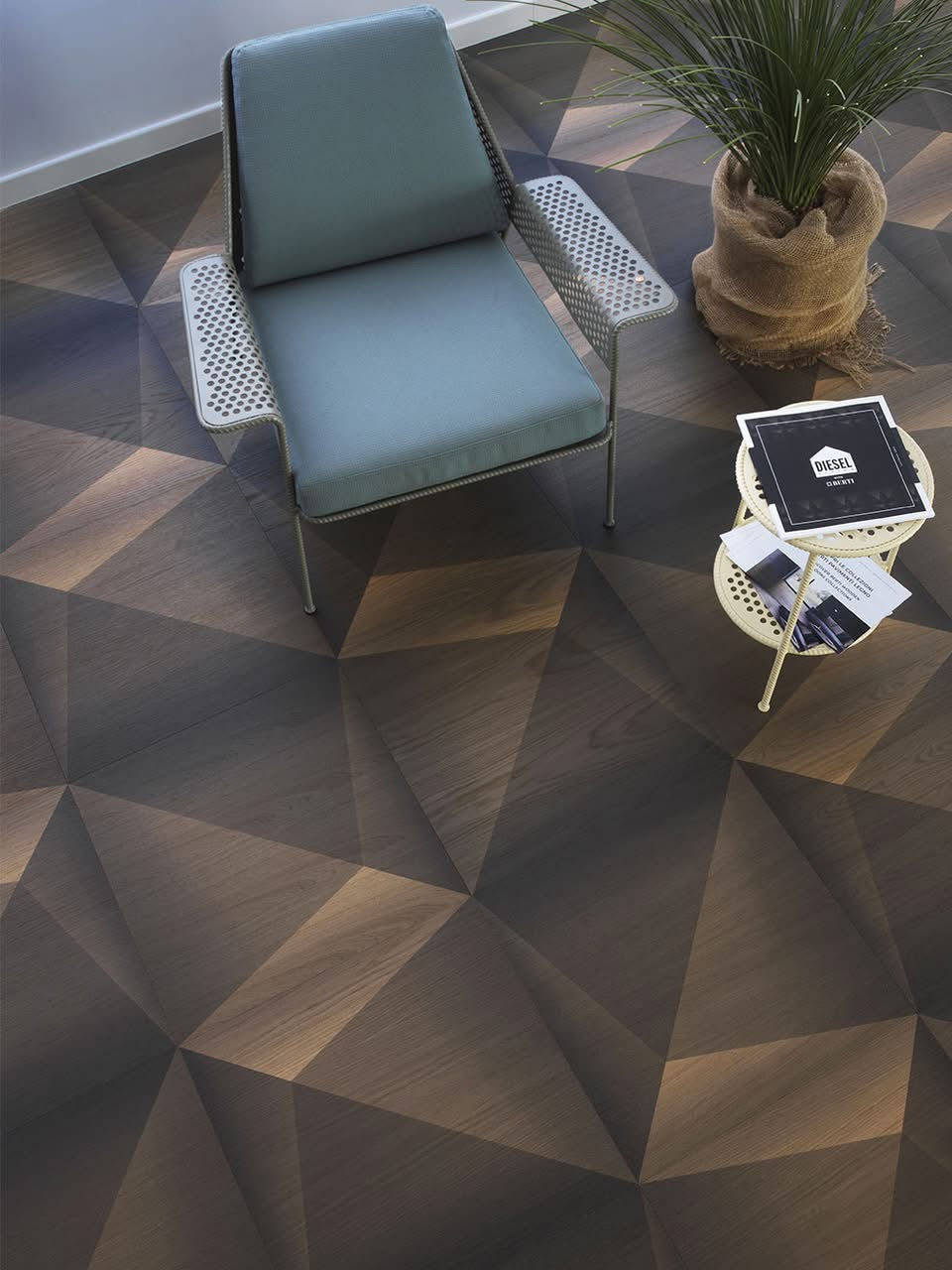
Herringbone is the pattern most clients picture first, and for good reason. Rectangular boards meet at right angles in a zigzag that reads as tailored in a Manhattan apartment and relaxed in a country house. Board length and width change the mood entirely: short, narrow slats feel traditional, while longer boards feel calmer and more modern. Center the pattern on the room's main axis, usually the fireplace, the entry or the longest sightline, so it looks intentional from the doorway. Our Greenwich herringbone guide covers the specification in more detail.
2. Chevron For A Cleaner Line

Chevron is herringbone's sharper cousin. Instead of overlapping at the ends, the boards are cut at an angle and meet in a continuous point, creating one clean arrow down the room. It suits long galleries, corridors and open plans where you want the eye pulled forward. Because every joint is mitered, chevron is less forgiving of milling variation, so we specify factory-cut boards and check each delivery before it reaches the floor.
Every pattern exaggerates the layout line. If the centerline is slightly off at the doorway, it is visibly off at the far wall.
3. Versailles Panels For Formal Rooms

Versailles parquet takes its name from the palace where the pattern was laid in the seventeenth century. Square panels of interlaced boards form a lattice that brings instant gravity to a dining room, library or salon. Panels come in solid or engineered construction, and the right choice depends on the subfloor and whether radiant heat is planned. Our Versailles parquet guide for Manhattan covers co-op and sound rules.
Considering Versailles or another formal pattern? Joe Avila can review your plans on a virtual consultation.
4. Basket Weave For Quiet Texture

Basket weave sets small groups of boards at right angles to one another, like threads in cloth. It is less dramatic than herringbone and works well in studies, dressing rooms and bedrooms, where texture matters more than movement. It is also a good way to carry a parquet language through a house without repeating the same pattern in every room.
5. Marquetry Borders That Frame The Room

A border turns a floor into a composition. A band of contrasting wood, or a simple frame of plank around a herringbone field, gives the pattern a clean edge at the walls and absorbs the small variations every room has. Borders belong on the floor plan, not improvised on site, so the field pattern lands evenly inside them.
6. An Inlaid Medallion As A Centerpiece
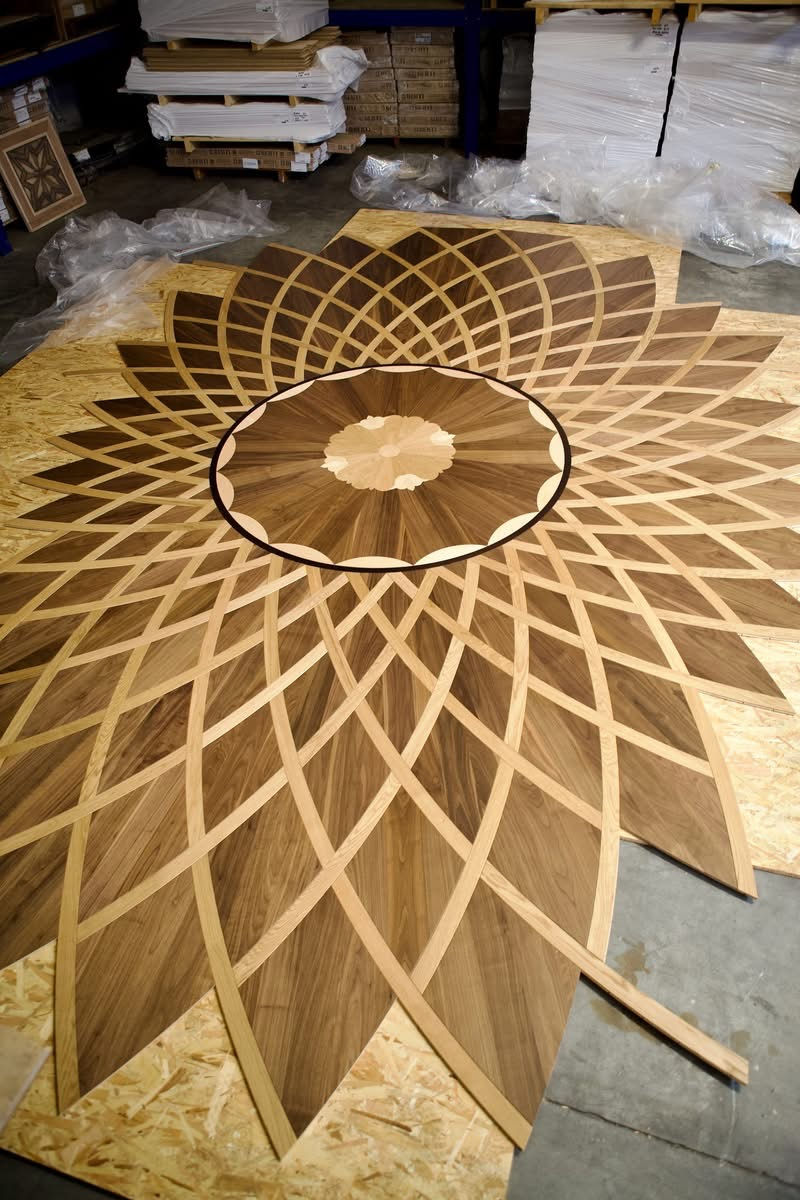
In an entry hall or rotunda, a medallion becomes the room's focal point. Inlays combine species and grain directions, so the pieces move differently as humidity changes. That makes moisture testing, acclimation and a stable indoor climate essential before and after installation. Specify a medallion with the same care as fine millwork.
Planning a border or medallion? Talk it through with an NWFA certified inspector before the order is placed.
7. Oversized Herringbone In Open Plans

Scaling up the boards is one of the most modern moves in pattern flooring. Longer, wider herringbone reads calmer in an open plan and shows more of the wood's grain. Wider boards also move more with the seasons, so we specify engineered construction where conditions call for it and write humidity targets into the specification. See how long hardwood should acclimate before installation.
8. Parquet In Grand Rooms And Ballrooms

Large rooms need patterns that hold their own at scale. Ballrooms, reception halls and institutional spaces often combine panels, borders and long field runs. At this size, flatness tolerances, expansion space and sound control under the floor matter as much as the pattern itself, the same thinking we bring to institutional and landmark buildings.
9. One Pattern Through The Living Spaces

In living spaces, a pattern should flow without awkward breaks at doorways. That means planning transitions, thresholds and the direction of the pattern room by room at the drawing stage. A single continuous layout often feels richer than a different pattern in every space.
Ready to choose a pattern for your home? Book a virtual consultation with Joe Avila.
10. The Finish That Makes The Pattern

Color and finish decide how much of the pattern you see. Pale, matte finishes soften a herringbone; darker or fumed tones sharpen the contrast between boards. Sample finishes on the actual boards you are buying, in the room's own light, before approving them. Our guide to custom colors and finishes goes further.
Planning A Patterned Wood Floor?
National Wood Floor Consultants specifies and sources herringbone, chevron, Versailles and custom parquet direct from domestic and European mills, then oversees installation with moisture, subfloor and layout checks. Call (908) 232-6600, book a consultation, or see our wood flooring specification services and materials and contractor sourcing. If a patterned floor is already showing gaps or lifting, our wood floor inspections find the cause.
Quick Answers About Patterned Wood Floors
What Is The Difference Between Herringbone And Chevron?
Herringbone boards are cut square and overlap at the ends in a zigzag. Chevron boards are cut at an angle so the ends meet in a continuous point, forming a clean arrow.
What Is Versailles Parquet?
Versailles parquet is a pattern of square panels made from interlaced boards, named for the palace where it was laid in the 1600s. It suits formal rooms such as dining rooms, libraries and salons.
Can Patterned Wood Floors Go Over Radiant Heat?
Often, with the right construction. Engineered herringbone and parquet are usually more stable over radiant heat than solid, but the choice depends on the heating system, the subfloor and the manufacturer's requirements.
Why Do Patterned Floors Need More Planning Than Plank?
A pattern magnifies small errors. The layout must be centered and square, the subfloor flat and dry, and the boards acclimated, or gaps and crooked lines show quickly.
Have a question about your own floor? Call (908) 232-6600, email joe@hugginsflooring.com or book a virtual consultation with Joe Avila, NWFA certified wood flooring inspector.
About The Author

Joe Avila is the founder and lead consultant of National Wood Floor Consultants, with 26 years in wood flooring. He is an NWFA Certified Wood Flooring Inspector, installer and sander, and teaches accredited AIA, ASID and IDCEC continuing education for architects and designers. His project experience includes Montclair University, One Wall Street, institutional and landmark buildings, and luxury residences and penthouses, and he pioneered subfloor sound-attenuation systems for New York City apartments. Read Joe's full profile.
Comments