Chevron Wood Floors on Long Island's Gold Coast: How to Specify and Source Them in Nassau County

Updated: 4 days ago

A specifier's guide to chevron wood floors for Nassau County and Long Island's Gold Coast: angle and layout, solid or engineered construction, moisture and humidity, sourcing and the installation checks that keep every point tight.
Planning a chevron floor for a home in Manhasset, Old Westbury, Oyster Bay or Locust Valley? Call Joe Avila at (908) 232-6600 or book a virtual consultation.
Phone: (908) 232-6600
Email: joe@hugginsflooring.com
Book online: Schedule a consultation
Office: 406B West Broad Street, Westfield, NJ 07090. Monday to Friday, 9 to 5. Serving clients nationwide.
The estates of Long Island's North Shore, from Sands Point to Muttontown, were built for formal rooms and long sightlines, and chevron is the pattern that suits them best. Its continuous points lead the eye down a gallery or across a dining room in a way plank cannot. It is also less forgiving than plank, so here is how we specify and source chevron floors for Nassau County homes and see them through installation.
Why Chevron Suits Gold Coast Homes

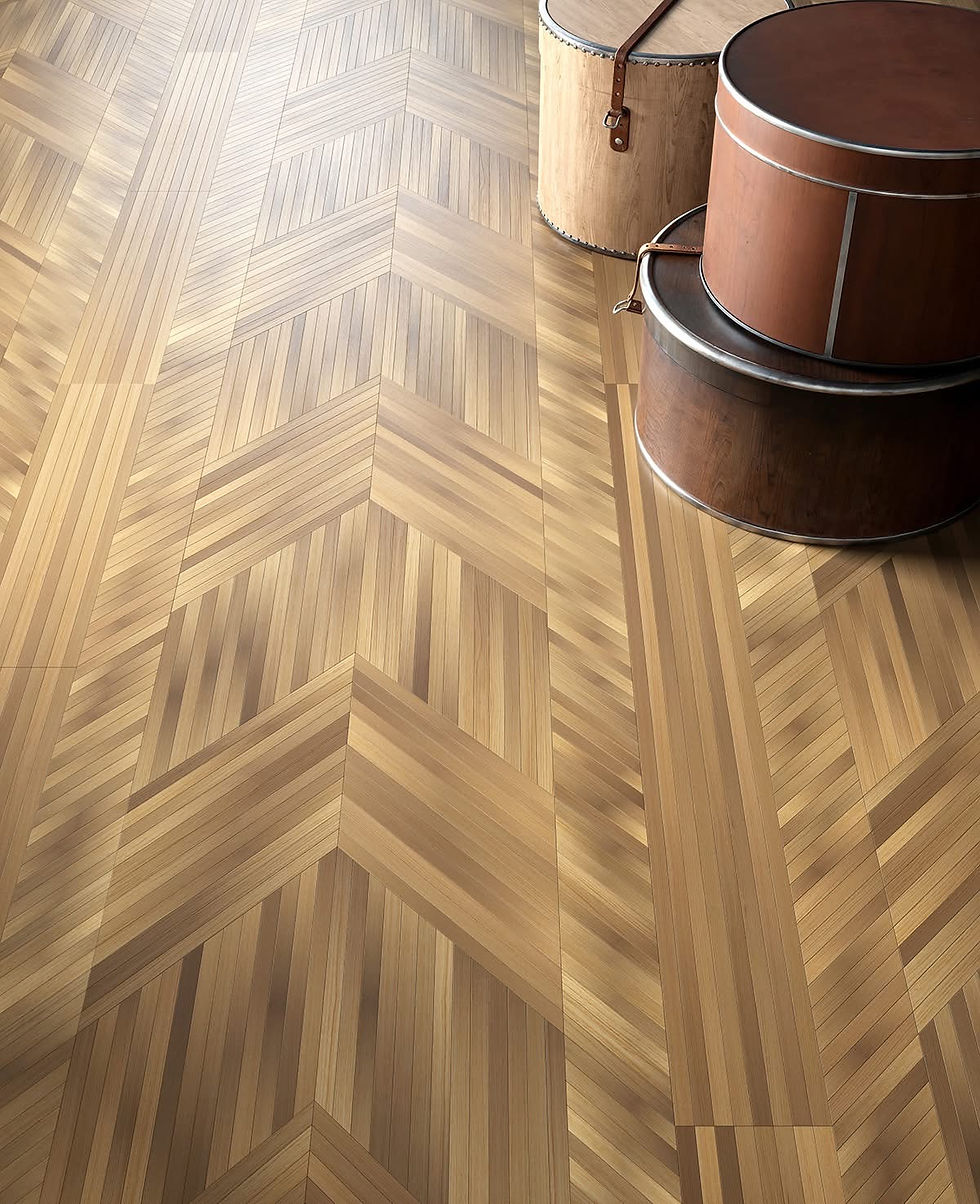
Chevron has a stronger direction than herringbone, because the board ends are cut at an angle and meet in a clean point. That makes it a natural fit for center halls, galleries and dining rooms in Georgian and Colonial Revival houses, and for the larger open rooms of new builds. It can sit alongside wide plank in secondary rooms or give way to Versailles parquet in the most formal spaces.
Getting The Angle And Layout Right

The angle of the cut, the width and length of each piece and the position of the centerline decide how the room reads. We set the centerline on the main axis of the room, plan how the points meet at doorways and fireplaces, and decide where borders or a band will finish the field. These choices go into the flooring specification and a layout drawing, so the installer and the mill work from the same plan. Our patterned floor ideas show how chevron fits with other layouts.
Solid Or Engineered Chevron

Solid chevron suits a well-built wood subfloor over a dry, conditioned space. Engineered chevron moves less as humidity changes, so it is often the better choice over concrete, over radiant heat or near the water. We compare wear layer, core and finish options with the design team, review mill grading, and approve finish and color on real samples under the room's own light.
Weighing solid against engineered for your chevron floor? Book a consultation and we will walk through the options for your house.
Basements, Slabs And Summer Humidity
Many North Shore homes sit close to Long Island Sound, with humid summers, dry heated winters and finished basements or slabs below the main floor. Before delivery we take moisture content readings of the subfloor and the flooring, plan acclimation at living conditions, and agree a humidity range with the mechanical engineer through our moisture control services. A chevron floor that is installed too wet or too dry shows it quickly, with cupping in August or open points in February.
Sourcing Chevron From Domestic And European Mills

Chevron depends on accurate machining: if the angle or the width varies, the points will not close. We source direct from domestic and European mills, confirm the profile and tolerances in writing, and check each delivery against the approved sample before installation. Our materials and contractor vetting covers both the flooring and the installer who will lay it.
Installation Checks That Keep The Points Tight
Subfloor flatness, fastening and moisture checked first
Centerline and layout snapped and approved before the first row
Flooring moisture content checked on arrival and before installation
Expansion space at walls, thresholds and fixed objects
Adhesive or fastener schedule matched to the mill's instructions
Final walk-through against the approved sample and finish
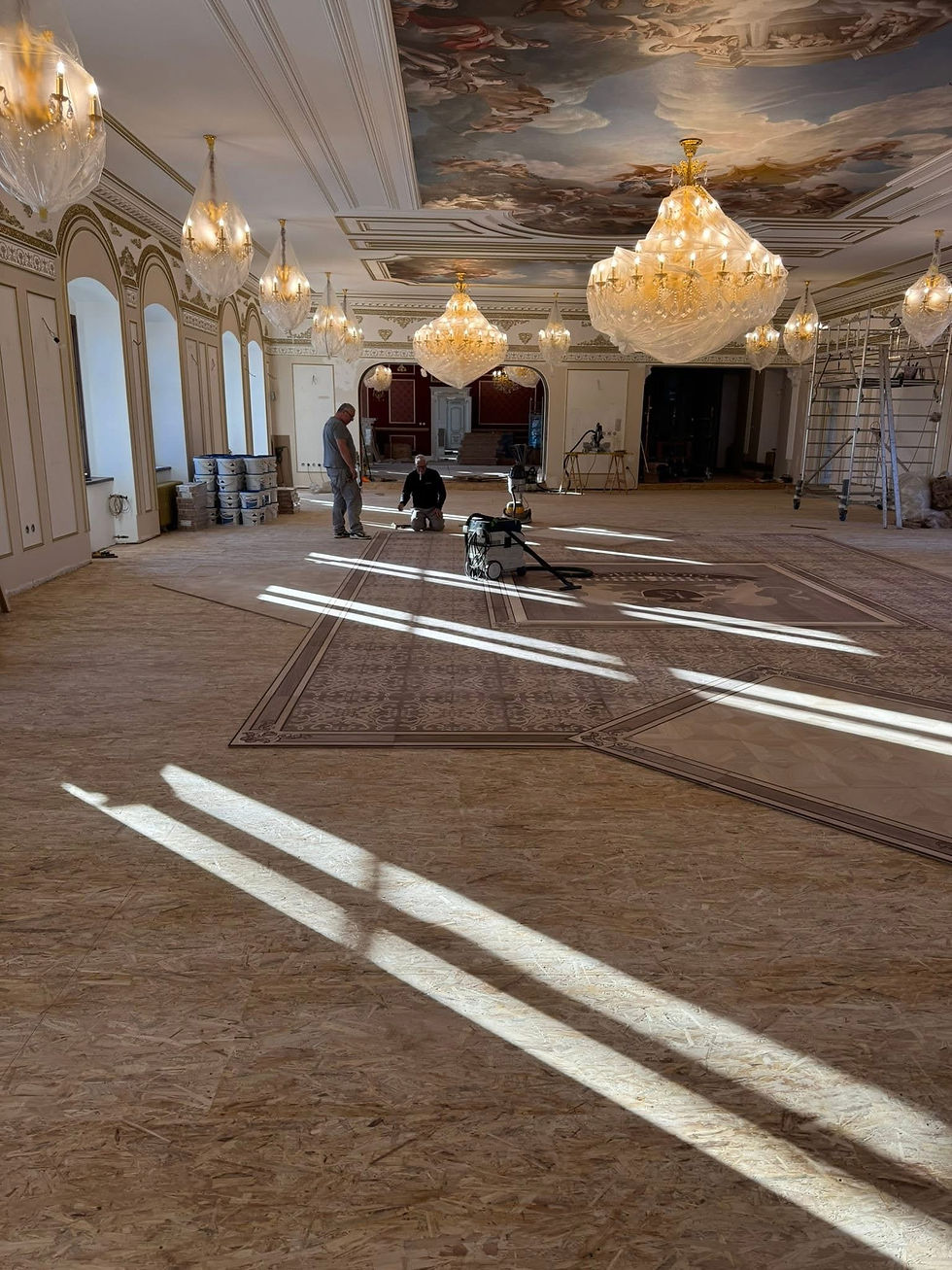
We vet the installer before work starts and keep photo and moisture records through on-site quality control visits at each stage. If a problem appears later, those records make hardwood floor inspections faster and give a flooring expert witness the evidence to show whether the product, the site or the installation was the cause.
Already worried about a chevron floor that is lifting or opening? Ask about our wood floor inspections.
Quick Answers: Chevron Floors In Nassau County
What is the difference between chevron and herringbone?
Chevron boards are cut at an angle so their ends meet in a clean point, which gives a strong zigzag. Herringbone boards are cut square and overlap in a broken pattern. Our patterned floor ideas compare the two.
Is engineered or solid chevron better for a Long Island home?
Engineered chevron is usually steadier over concrete, radiant heat or in humid coastal areas. Solid works well over a dry, well-built wood subfloor. A flooring specification sets the right choice for each room.
Why are the points on my chevron floor opening up?
Common causes are wood installed at the wrong moisture content, dry winter air, inconsistent machining or a layout that drifted. A certified wood inspector can find the cause with moisture testing and measurements.
Do you work in Nassau County and on the North Shore?
Yes. We consult across Long Island, including Manhasset, Old Westbury, Oyster Bay and Locust Valley, from our Westfield, NJ office, and offer virtual consultations nationwide.
Planning A Chevron Floor On Long Island?

National Wood Floor Consultants specifies and sources chevron, herringbone, parquet and wide plank floors for architects, designers, builders and owners in Nassau County and across the Northeast, then oversees installation. Call (908) 232-6600, book a consultation, or read about our flooring specification services and materials and contractor vetting.
Have a question about your own floor? Call (908) 232-6600, email joe@hugginsflooring.com or book a virtual consultation with Joe Avila, NWFA certified wood flooring inspector.
About The Author

Joe Avila is the founder and lead consultant of National Wood Floor Consultants, with 26 years in wood flooring. He is an NWFA Certified Wood Flooring Inspector, installer and sander, and teaches accredited AIA, ASID and IDCEC continuing education for architects and designers. His project experience includes Montclair University, One Wall Street, institutional and landmark buildings, and luxury residences and penthouses, and he pioneered subfloor sound-attenuation systems for New York City apartments. Read Joe's full profile.
Related Reading
Chevron Floors for Brooklyn Heights Brownstones: How to Specify and Source Them
Herringbone and Chevron Floors in Greenwich, CT: How to Specify and Source Them
Chevron Wood Floors in Bel Air and Beverly Hills: How to Specify and Source Them
10 Patterned Wood Floor Ideas for Luxury Homes, From Herringbone to Versailles
Wide Plank Flooring in the Hamptons: How to Specify and Source It for Coastal Homes
What Does a Hardwood Floor Inspection Include? A Certified Inspector's Checklist
Comments