Wide Plank Flooring in the Hamptons: How to Specify and Source It for Coastal Homes

Updated: 26 minutes ago

Planning a wide plank floor? Contact Joe Avila at National Wood Floor Consultants:
Phone: (908) 232-6600
Email: joe@hugginsflooring.com
Book online: Schedule a consultation
Office: 406B West Broad Street, Westfield, NJ 07090. Monday to Friday, 9 to 5. Serving clients nationwide.
Wide plank floors suit the light-filled, relaxed rooms of a Hamptons estate better than almost anything else, which is why so many architects and owners on the East End ask for them. They are also the floor most likely to cup, gap or crack when the specification ignores the setting. Ocean air, homes that sit closed for months, radiant heat and new construction moisture all hit a wide board harder than a narrow one. Here is how we specify, source and oversee wide plank flooring for homes from Southampton to Montauk and the North Fork.
Why Wide Planks Move More

Wood expands and shrinks across its width as it takes on and gives up moisture. A wider board has more wood across that width, so the same change in humidity produces a bigger movement in each plank and a more visible gap or cup. That does not make wide plank a risky choice. It means the species, cut, construction and moisture targets have to be chosen for the house, not taken from a catalog.
Specifying Wide Plank For A Coastal Home

A good specification answers the questions an installer would otherwise answer on site. For a Hamptons project we set out:
Board width, thickness and lengths, and whether the floor is solid or engineered
Species and cut, such as rift and quartered or plain sawn white oak, and the grade
Target moisture content for the flooring and the subfloor before installation
Fastening method and any adhesive, based on width and subfloor type
Finish system, including oil or site-finished options
Who tests, who records the readings and who signs off at each stage
Engineered wide plank is often the better choice over radiant heat or a concrete slab, because its layered core resists movement. Solid wide plank can work well over a sound wood subfloor when the home's humidity is controlled year round.
Seasonal Homes And Humidity Control

Many East End homes are closed or lightly used for part of the year. When the heating and air conditioning are turned down or switched off, indoor humidity follows the weather outside, and a wide plank floor follows the humidity. Summer sea air can push boards to swell and cup, and a dry winter with the heat on can open gaps. We ask early how the house will be run when the owners are away and write the humidity range the floor needs into the specification, so the mechanical design and the floor are planned together.
Subfloor, Moisture And Acclimation

New construction holds a lot of water in its concrete, framing and plaster. Wide plank laid before the building has dried out is one of the most common causes of the cupping we see as inspectors. We test the moisture of the subfloor and the flooring, compare them with NWFA guidelines and the manufacturer's requirements, and only release the floor for installation when the readings are within range. Acclimation is planned around the conditions the house will actually live in, not a fixed number of days.
Sourcing Wide Plank Direct From The Mill
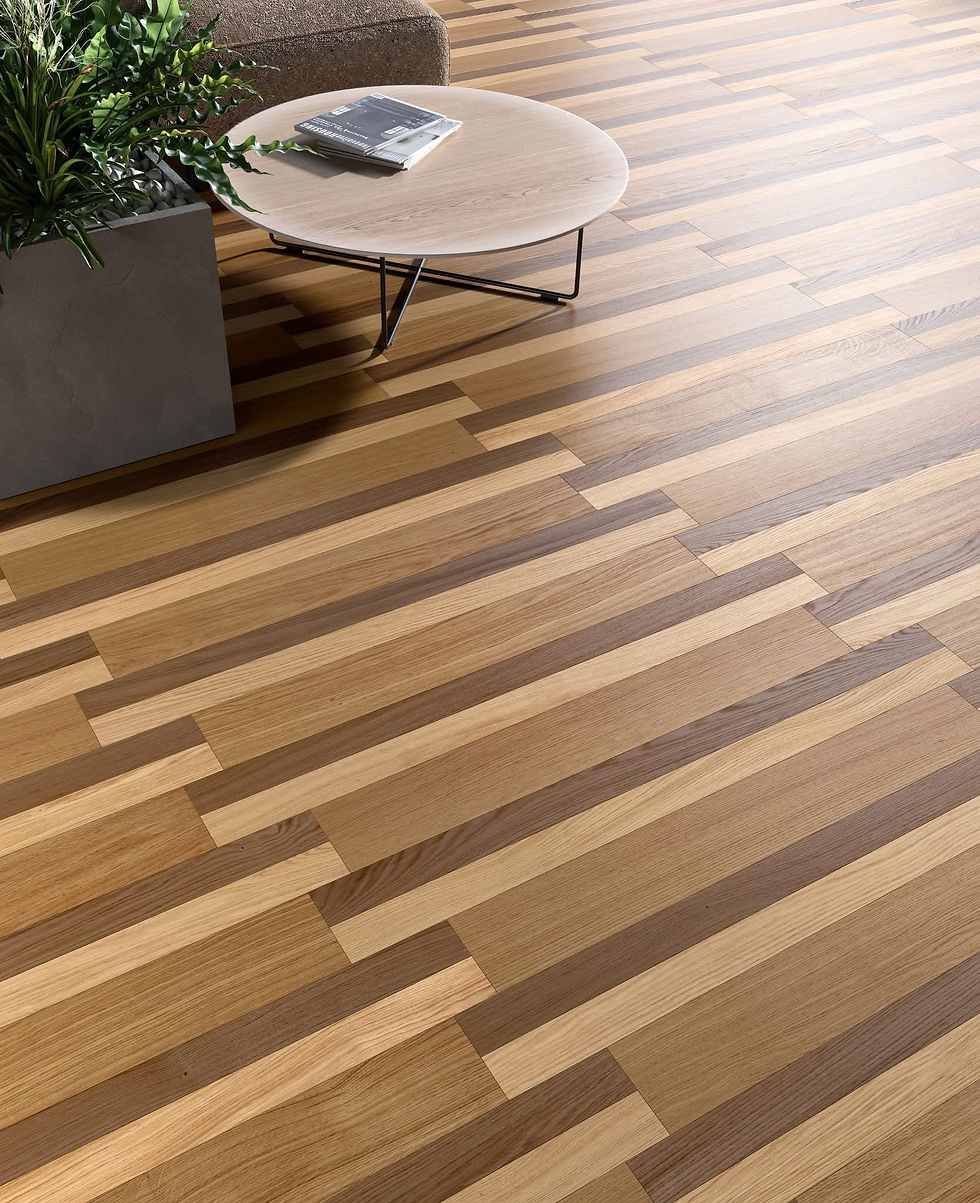
We specify and source wide plank flooring direct from domestic and European mills, and we check that the boards delivered match the specification for width, thickness, grade, moisture and finish before they go down. Long, wide boards are where differences between suppliers show up, so we review samples and mill documentation at the start rather than discover a problem after installation.
Installation Checks We Make

Moisture readings of the flooring and subfloor, recorded before work starts
Subfloor flatness and fastening, especially under long boards
Expansion space at walls, thresholds and fixed cabinetry
Board layout and length mix, so the floor reads as one surface
Fastening or adhesive coverage that matches the specification
Indoor temperature and humidity during installation and finishing
These are the same points an NWFA certified inspector looks at when a wide plank floor fails. Checking them during the job is how you avoid needing an inspection later.
Quick Answers About Wide Plank Flooring In The Hamptons
Is Wide Plank Flooring A Good Choice For A Beach House?
Yes, if it is specified for the setting. Engineered construction, a stable species and cut, the right moisture targets and year-round humidity control let wide plank perform well in a coastal home.
Should Wide Plank Be Solid Or Engineered In The Hamptons?
Engineered is usually the safer choice over radiant heat, concrete slabs or in homes that sit closed for part of the year. Solid can work over a dry, sound wood subfloor in a home with controlled humidity.
Why Do Wide Plank Floors Cup Or Gap?
Wide boards move more across their width as humidity changes. Cupping usually means moisture from below or high humidity, and gaps usually mean dry conditions, often in winter with the heat on.
Who Should Check A Wide Plank Floor During Installation?
An independent consultant or NWFA certified inspector who is not the installer, testing moisture and checking the subfloor, fastening and site conditions against the specification and NWFA guidelines.
Planning A Wide Plank Floor In The Hamptons?
National Wood Floor Consultants specifies, sources and oversees wide plank, herringbone and parquet floors for homes in the Hamptons and nationwide. Call (908) 232-6600 or book a consultation. Learn more about our wood flooring specification services and materials and contractor vetting.
About The Author
Joe Avila is the founder and lead consultant of National Wood Floor Consultants, with 26 years in wood flooring. He is an NWFA Certified Wood Flooring Inspector, installer and sander, and teaches accredited AIA, ASID and IDCEC continuing education for architects and designers. His project experience includes Montclair University, One Wall Street, institutional and landmark buildings, and luxury residences and penthouses, and he pioneered subfloor sound-attenuation systems for New York City apartments. Read Joe's full profile.



Comments