Chevron Wood Floors in Bel Air and Beverly Hills: How to Specify and Source Them

Updated: 3 days ago

Chevron is having a moment in the canyons and flats of Bel Air, Beverly Hills and Holmby Hills. Here is how to specify and source it so the points stay tight over concrete slabs, radiant heat and dry Santa Ana air.
Planning a chevron floor in Bel Air or Beverly Hills? Contact Joe Avila at National Wood Floor Consultants:
Phone: (908) 232-6600
Email: joe@hugginsflooring.com
Book online: Schedule a consultation
Office: 406B West Broad Street, Westfield, NJ 07090. Monday to Friday, 9 to 5. Serving clients nationwide.
A chevron floor reads as precise from across the room, and that is exactly why small errors show. In Los Angeles estates the pattern often runs through large open living spaces, over concrete slabs and radiant heat, under walls of glass. Each of those conditions affects how the boards move. This guide walks through what an architect or owner should decide before the first board is cut.
Why Chevron Suits Bel Air And Beverly Hills Homes

Chevron cuts each board at an angle so the ends meet in a continuous point, while herringbone uses square-ended boards set in a staggered zigzag. Chevron feels more formal and directional, which suits long galleries, entry halls and the large living rooms common in Bel Air and Beverly Hills. Because every joint is a mitred point, the pattern depends on accurate milling and a flat, stable subfloor. Our guide to herringbone and chevron in Greenwich covers the pattern choice in more detail, and our patterned floor ideas compare chevron with Versailles and basket weave.
Start With The Slab

Many homes in the area sit on concrete slabs, and a slab is rarely as dry as it looks. Before a chevron floor is specified, the slab should be tested for moisture and checked for flatness, because a damp area or a high spot will show up as lifted points or open joints within a season. We specify the testing, the moisture barrier and the installation method to suit the slab, following the manufacturer's requirements and NWFA guidelines. Our moisture control services and our guide to wood floors over concrete slabs show how that work is planned.
Dry Air, Santa Ana Winds And Seasonal Movement

Southern California air swings between dry spells, especially when the Santa Ana winds blow, and milder, damper periods near the coast. Wood shrinks and swells with those changes. In a chevron floor, shrinkage opens gaps along the mitred points first, and swelling can push points up. Specifying an engineered chevron with a stable core, and keeping indoor humidity in a steady range all year, does more to protect the floor than any finish. Our posts on moisture content and seasonal gaps explain what normal movement looks like, and our guide to hardwood floor crowning shows what swelling does to the surface.
Planning a chevron floor for a Los Angeles home? Book a virtual consultation with Joe Avila.
Radiant Heat Under A Chevron Floor

Radiant heat is common under stone and wood in high-end Los Angeles homes. Engineered chevron is usually the safer choice over radiant systems, with surface temperature limits and a gradual start-up schedule written into the specification. Running the heat before installation helps drive residual moisture out of the slab, and the boards should acclimate to the room's normal operating conditions before they are laid.
Laying Out The Pattern In Large, Open Rooms

In a large open room the chevron points should run along the room's main axis, usually from the entry toward the view. The layout is set from a centerline snapped across the whole space, not from one wall, so the pattern stays straight through doorways and into adjoining rooms. Borders, transitions to stone and where the points stop at each threshold should all be drawn in the specification before material is ordered, because chevron boards are milled as left and right pieces to a fixed angle.
Sunlight, Glass Walls And Finish

Floor-to-ceiling glass brings in strong California light, which can change the color of oak and walnut over time and warm the floor surface near the windows. We plan the finish with that in mind, choosing color, sheen and protection that age evenly, and we sample finishes on site in the actual light. Our guide to custom colors and finishes covers how those samples are approved.
Sourcing Direct From Domestic And European Mills
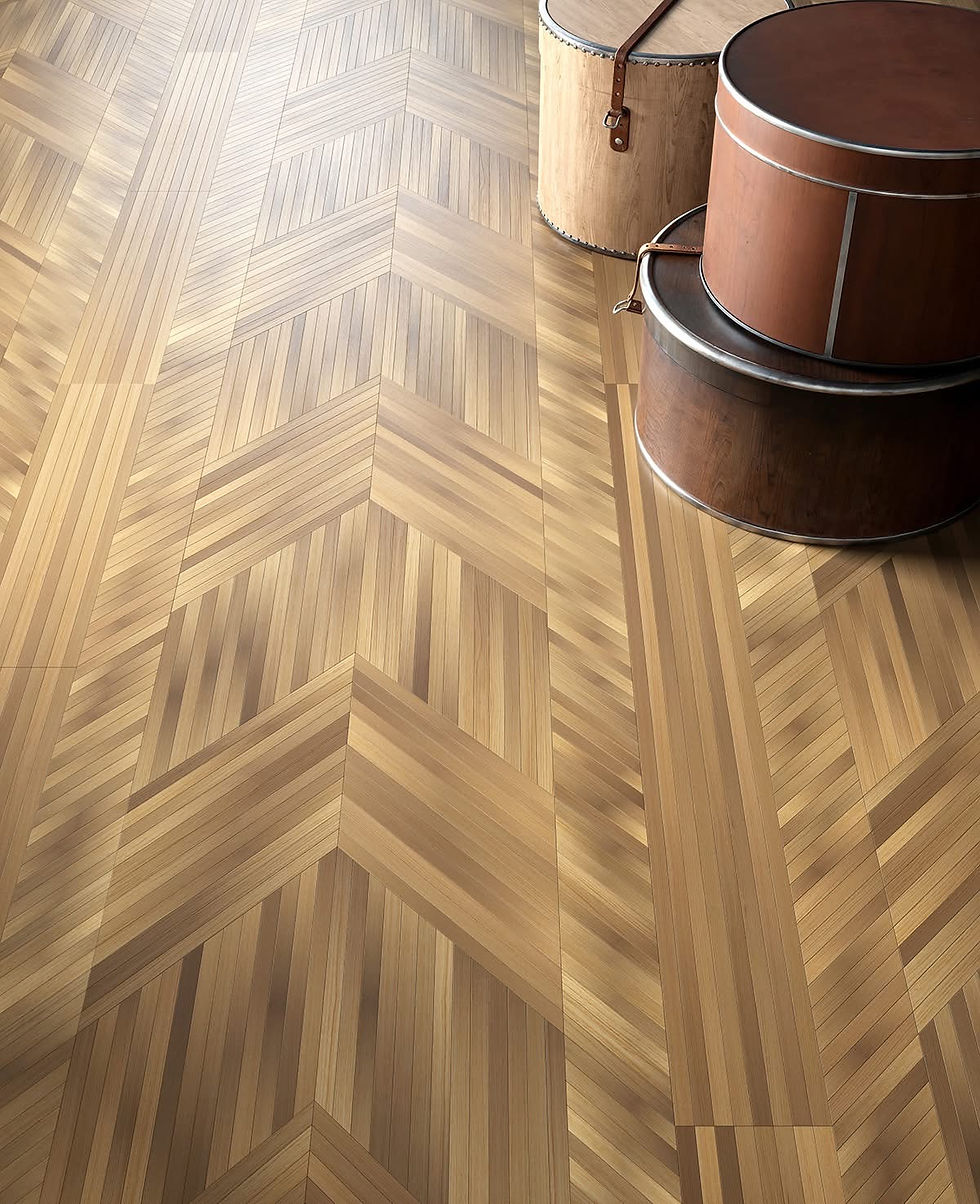
We specify and source chevron flooring direct from domestic and European mills, matching species, grade, angle and wear layer to the project rather than to what a showroom has in stock. Board dimensions and the angle are confirmed with the mill before production, and samples are approved by the architect and owner. Our materials and contractor vetting service also checks that the installer has real pattern experience, and our fabrication facility guide explains how milling is reviewed.
Installation Checks We Make

Slab moisture and flatness readings before material arrives.
Moisture content of the chevron boards and room humidity during acclimation.
Centerline, angle and point alignment checked on the first rows.
Adhesive coverage, expansion space and transitions at every threshold.
A final walk-through with moisture readings recorded for the owner's file.
These are the same points a certified inspector reviews when a patterned floor fails, so checking them during installation is the best protection for the owner and the installer. Our pre-installation site inspection guide and on-site quality control page go further.
Want a second set of eyes on your plans? Book a virtual consultation with Joe Avila.
Quick Answers About Chevron Floors In Bel Air And Beverly Hills
What Is The Difference Between Chevron And Herringbone?
Chevron boards are cut at an angle so their ends meet in a continuous point. Herringbone uses square-ended boards laid in a staggered zigzag. Both suit formal rooms; chevron reads as more directional. See our patterned floor ideas.
Can A Chevron Wood Floor Go Over A Concrete Slab?
Yes, once the slab has been tested for moisture and flatness and the right barrier and installation method are specified. Engineered chevron is usually preferred over slabs. Our moisture content guide explains the readings.
Does Chevron Work Over Radiant Heat?
Usually, as engineered flooring with surface temperature limits and a gradual start-up. The heating system should run before installation, and the boards should acclimate first.
Who Should Check A Chevron Floor During Installation?
An independent consultant or NWFA certified inspector who is not the installer, checking moisture, layout and point alignment on the first rows. See what a hardwood floor inspection includes.
Planning A Chevron Floor In Bel Air Or Beverly Hills?

National Wood Floor Consultants specifies, sources and oversees chevron and patterned wood floors for homes in Bel Air, Beverly Hills and nationwide. Call (908) 232-6600 or book a consultation, and see our specification services and materials and contractor vetting.
Have a question about your own floor? Call (908) 232-6600, email joe@hugginsflooring.com or book a virtual consultation with Joe Avila, NWFA certified wood flooring inspector. Planning a new floor? See our wood flooring specification and sourcing services.
About The Author

Joe Avila is the founder and lead consultant of National Wood Floor Consultants, with 26 years in wood flooring. He is an NWFA Certified Wood Flooring Inspector, installer and sander, and teaches accredited AIA, ASID and IDCEC continuing education for architects and designers. His project experience includes Montclair University, One Wall Street, institutional and landmark buildings, and luxury residences and penthouses, and he pioneered subfloor sound-attenuation systems for New York City apartments. Read Joe's full profile.
Related Reading
Chevron Floors for Brooklyn Heights Brownstones: How to Specify and Source Them
Fumed and Smoked Oak Floors in Montecito and Santa Barbara: How to Specify and Source Them
Chevron Wood Floors on Long Island's Gold Coast: How to Specify and Source Them in Nassau County
Herringbone and Chevron Floors in Greenwich, CT: How to Specify and Source Them
Wood Floor Inspector in Los Angeles: Dry Air, Slabs and Seasonal Movement
Engineered Wood Floors for Palm Beach and Naples Homes: How to Specify Over Concrete Slabs
Wood Floors for Aspen and Vail Homes: How to Specify for Dry Air and Altitude
Comments