Herringbone Floors Over Radiant Heat in Short Hills, Summit and Rumson, NJ: How to Specify and Source Them

Updated: 5 days ago

A specifier's guide to herringbone floors over radiant heat in Short Hills, Summit and Rumson, New Jersey: construction, slab and subfloor preparation, temperature limits and the checks that keep a pattern tight through the heating season.
Planning a herringbone floor over radiant heat in Short Hills, Summit or Rumson? Call Joe Avila at (908) 232-6600 or book a virtual consultation.
Phone: (908) 232-6600
Email: joe@hugginsflooring.com
Book online: Schedule a consultation
Office: 406B West Broad Street, Westfield, NJ 07090. Monday to Friday, 9 to 5. Serving clients nationwide.
Herringbone has become the floor of choice for the kitchens, family rooms and entry halls of Short Hills, Summit and Rumson, and many of those rooms now run on radiant heat. Warm floors and a tight pattern can live together, but only when the floor is planned for the heat from the start. Here is how we specify and source herringbone for heated rooms and oversee the installation, a few miles from our Westfield office.
Why Herringbone Suits Short Hills, Summit And Rumson Homes

Herringbone works in the colonial revivals and new builds of Essex, Union and Monmouth counties because it reads as tailored rather than rustic. Short pieces also move less across their width than a wide plank floor, which helps over heat. Our herringbone and chevron guide covers the pattern choice itself, and our patterned wood floor ideas show how it compares with chevron and Versailles.
Radiant Heat Changes The Specification
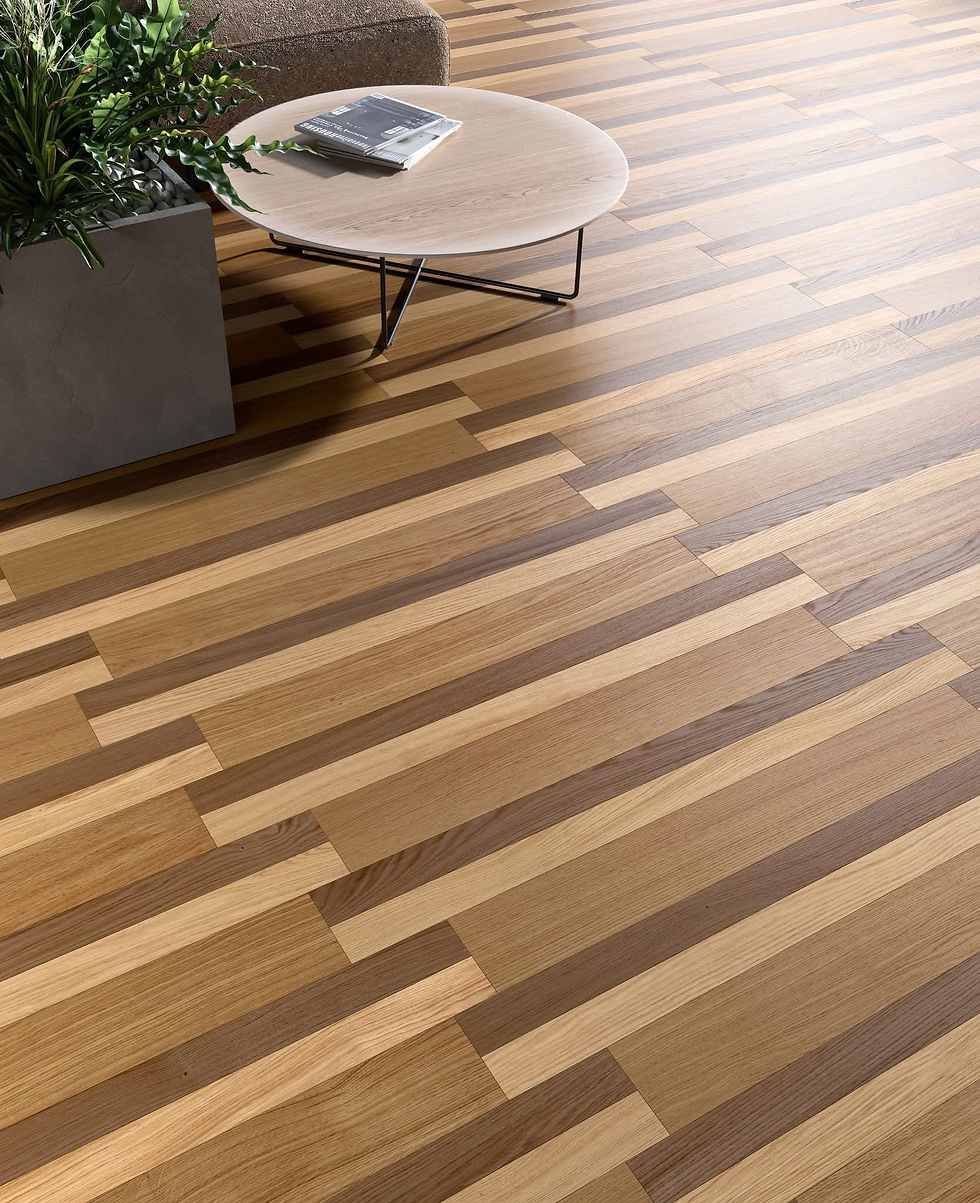
Over radiant heat, most designers choose engineered herringbone, with a sawn wear layer on a stable cross-ply backing, because it shrinks and swells less than solid wood as the slab warms and cools. Species matters too: rift and quartered white oak and European oak are steadier choices than more reactive woods. We write species, grade, construction, piece size and finish into the specification and source the flooring direct from domestic and European mills that confirm it is suitable for radiant heat.
Preparing The Slab Or Subfloor

A new slab holds a lot of water. The heating system should be run before installation to help dry it, and then the slab is tested. We take moisture content readings of the slab or subfloor and of the flooring itself, and plan acclimation with the heat running at normal living conditions. Skipping this step is a common cause of cupping and open joints in the first winter.
Reviewing a radiant heat plan or a set of samples? Book a consultation and we will check them against your drawings.
Temperature Limits And Humidity Control

Wood does not like sudden heat. Flooring makers and NWFA guidelines limit the floor surface temperature and call for gradual changes when the system starts up each fall. Dry winter air in New Jersey adds to the stress, so we set a target humidity range with the mechanical engineer and recommend humidity control for heated rooms. Without it, small gaps between herringbone pieces in winter are likely.
Layout, Borders And Adhesive

Herringbone is laid from a centerline so the pattern runs straight through doorways and sits evenly in the room, often with a border to finish the edges. Over a slab, the floor is usually glued down with an adhesive approved for radiant heat. We approve the layout, border, transitions and adhesive with the installer, and confirm the finish and color against the signed-off sample.
Installation Checks We Make

Slab or subfloor moisture, flatness and fastening before delivery
Radiant system run, then set to normal living temperature
Flooring moisture content and piece size checked on arrival
Adhesive approved for radiant heat and the slab conditions
Layout, centerline and border approved before work starts
A final walk-through against the approved sample and finish
We vet the installer before work starts and keep photo and moisture records through the job, with quality control visits at each stage. If a floor fails later, those records make hardwood floor inspections faster and clearer, and a certified wood inspector can show whether the heat, the moisture or the installation was the cause.
Already have a herringbone floor that is gapping or lifting over radiant heat? Ask about our wood floor inspections.
Quick Answers: Herringbone Over Radiant Heat In New Jersey
Can you put herringbone over radiant floor heat?
Yes. Engineered herringbone in a stable species, laid over a dry, tested slab with an approved adhesive and controlled surface temperature, performs well over radiant heat. We confirm suitability in the specification.
Is engineered or solid herringbone better over radiant heat?
Engineered is usually the better choice, because its cross-ply backing moves less as the floor warms and cools. Solid wood over radiant heat carries more risk of gaps and cupping.
Why is my herringbone floor gapping in winter?
Dry indoor air and heat from the slab shrink the wood. Some seasonal gapping is normal, but wide or growing gaps point to moisture, temperature or installation problems that a certified wood inspector can test for.
Do you work in Short Hills, Summit and Rumson?
Yes. Our office is in Westfield, NJ, so we consult on site in Short Hills, Summit, Rumson and across New Jersey, and offer virtual consultations nationwide.
Planning A Herringbone Floor Over Radiant Heat?

National Wood Floor Consultants specifies and sources herringbone floors for architects, designers, builders and owners in Short Hills, Summit, Rumson and across New Jersey, then oversees installation. Call (908) 232-6600, book a consultation, or read about our flooring specification services and materials and contractor vetting.
Have a question about your own floor? Call (908) 232-6600, email joe@hugginsflooring.com or book a virtual consultation with Joe Avila, NWFA certified wood flooring inspector.
About The Author

Joe Avila is the founder and lead consultant of National Wood Floor Consultants, with 26 years in wood flooring. He is an NWFA Certified Wood Flooring Inspector, installer and sander, and teaches accredited AIA, ASID and IDCEC continuing education for architects and designers. His project experience includes Montclair University, One Wall Street, institutional and landmark buildings, and luxury residences and penthouses, and he pioneered subfloor sound-attenuation systems for New York City apartments. Read Joe's full profile.
Related Reading
Herringbone Floors for Princeton, NJ Homes: How to Choose and Specify Them
Herringbone and Chevron Floors in Greenwich, CT: How to Specify and Source Them
10 Patterned Wood Floor Ideas for Luxury Homes, From Herringbone to Versailles
Rift and Quartered White Oak Floors in Bergen County, NJ: How to Specify and Source Them
Engineered Hardwood Problems: Delamination, Peaking and When to Call an Inspector
What Is a Certified Wood Flooring Inspector? Training, Certification and What They Do
Comments